
What is an Injection Molding?
Leave a message
Injection Molding Basics
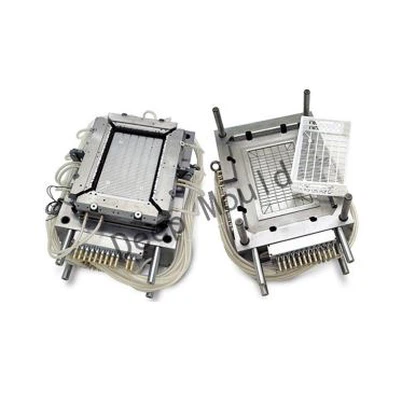
Most solid plastic materials are produced by a process called injection molding. During the process of plastic injection molding, plastic resin pellets are heated until they melt. The melted liquid plastic is introduced, under pressure (injected), into a mold. The mold may be made up of any metal such as steel or aluminum. The molten form is then allowed to cool down and set into a solid form. The plastic material thus formed is then retrieved out of the mold.
The injection-molding process has been around for nearly 150 years. Reciprocating screw injection molding machines were introduced in the 1960s and are still used today. The injection molding machine comprises an injection unit, where material is prepared for injection into the mold, and a clamping unit, where the injected plastic is captured in the mold under conditions of temperature and pressure to form the finished product.
The actual process of plastic molding is just an expansion of this basic process. The plastic goes into a barrel or chamber by gravity or is force-fed. As it moves down, the increasing temperature melts the plastic. Then, the molten plastic is forcibly injected into the mold under the barrel with an appropriate shape. As the plastic cools, it solidifies. The plastic molded like this has a reverse shape of that of the mold. A variety of shapes can be produced by the process. The process of plastic molding is cheap due to the simplicity involved, and the quality of the plastic material is modifiable by changing the factors involved in the custom injection molding basics process:
The pressure of injection can be varied to change the hardness of the final product. Injection pressure causes the material to flow. Pressure increases as mold filling becomes more complex. There is a direct relationship between injection pressure and injection line pressure.
The thickness of the mold affects the quality of the part produced. On average, the minimum wall thickness of an injection molded part ranges from 2mm to 4mm (.080 inch to .160 inch). Parts with uniform walls thickness allow the mold cavity to fill more precisely since the molten plastic does not have to be forced through varying restrictions as it fills.
The temperature for melting and cooling determine the quality of the plastic formed. In plastic injection molding, the temperature of the melt in the cavity is generally between 200 and 300 degrees, the melt is formed in the cavity, cooled, and solidified into a product profile.