
Aluminum Injection Molds For Prototype And Small-Batch Production
Leave a message
Developing a new plastic product usually requires several rounds of design adjustments and testing. Before committing to full-scale production, manufacturers often need molded samples to evaluate dimensions, fit, appearance, and functionality. However, investing in a production steel mold too early can result in high initial tooling costs, particularly when the project only requires a limited number of parts.
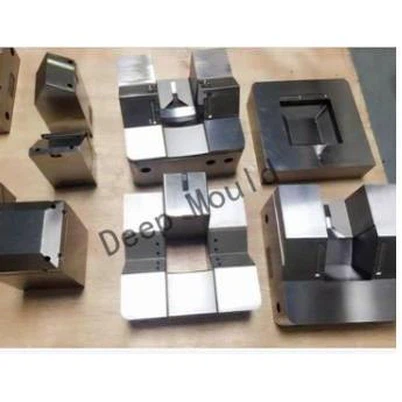
In these situations, aluminum prototype mold services offer a practical option for product development and low-volume production. Aluminum tooling allows manufacturers to produce injection-molded samples for design verification and product testing without immediately investing in a full production mold. At Deep Mould, we manufacture custom prototype molds using Aluminum 6061 and 7075. The material is selected according to the part geometry, tooling requirements, and expected production volume.
Is an Aluminum Prototype Mold Right for Your Project?
An aluminum prototype mold is worth considering when a project needs actual injection-molded parts but does not yet require a high-volume production tool.
For example, a product brand may need several hundred or a few thousand components for assembly checks, functional testing, customer approval, or an initial market launch. At this stage, a conventional steel mold may involve more tooling investment than the project requires.
Aluminum prototype tooling offers a more practical option for these early production needs. Deep Mould typically handles projects with estimated quantities ranging from 200 to 5,000+ molded parts. The suitable quantity, however, depends on the part structure, plastic material, mold design, and expected production conditions.
The usual lead time for our prototype molds is around 15–28 days. This gives customers a way to obtain molded samples within a relatively short development schedule. Actual timing depends on design complexity, tooling requirements, and project confirmation.
Choosing Between Aluminum 6061 and 7075
The aluminum grade affects machining, tooling strength, and the intended use of the prototype mold. Deep Mould commonly works with Aluminum 6061 and Aluminum 7075.
Aluminum 6061 is widely used in machined components and prototype tooling. It offers good machinability and a practical balance of mechanical properties. For many plastic part projects, it provides a suitable option for checking product dimensions, assembly relationships, and basic functions.
Aluminum 7075 has higher mechanical strength than 6061 in typical material comparisons. It may be considered when the mold design requires greater material strength or when the tooling has more demanding structural requirements.
Neither grade is automatically suitable for every project. The choice should take into account the part geometry, resin type, expected shot quantity, mold structure, and machining requirements. Our team can review these details before confirming the material for a custom aluminum prototype mold.

Evaluating Plastic Part Design with Prototype Molds
A prototype mold helps turn a product design into physical parts that engineers can examine and test. This is important because a 3D model alone cannot show every issue that may appear during injection molding or assembly.
With custom aluminum prototype mold services, customers can evaluate several aspects of a plastic component:
• Dimensional accuracy: Measure important features against the 2D drawing and specified tolerances.
• Assembly fit: Check mounting holes, clips, connection points, and mating surfaces.
• Part appearance: Examine surface finish, visible molding marks, and overall appearance.
• Functional performance: Test the part under its intended operating conditions.
• Moldability: Review filling, demolding, and areas that may require design adjustments.
• Design revisions: Identify changes before proceeding with production tooling.
These checks help engineers make decisions based on molded samples rather than design assumptions. If a feature needs adjustment, the team can review the geometry before committing to a larger production mold.
Custom Aluminum Prototype Molds for Different Applications
Plastic parts used in different industries often have different requirements. Some need accurate mounting features, while others focus more on appearance, assembly, or functional testing. For this reason, prototype tooling should follow the actual product design rather than a fixed mold configuration.
Deep Mould provides custom aluminum prototype mold manufacturing for applications such as:
• Automotive components: Interior fittings, plastic housings, brackets, and functional parts.
• Household appliances: Covers, enclosures, structural components, and assembly parts.
• Medical equipment: Plastic components used for product development and design evaluation.
• Consumer products: Housings, functional parts, and appearance prototypes.
• Industrial equipment: Custom plastic components for equipment assemblies and testing.
Customers can provide 3D files, drawings, material requirements, and estimated quantities. Based on this information, our engineering team can review the part structure and discuss the appropriate tooling approach.
Prototype Tooling and Subsequent Production
An aluminum prototype mold is generally intended for development work and limited production. It can help companies evaluate a product before deciding whether to invest in a production steel mold.
However, prototype tooling and production tooling serve different purposes. If a product will require long production runs, higher wear resistance, or more demanding process conditions, a production mold may be more suitable. Therefore, it is important to consider the expected lifetime and production volume before selecting the tooling type.
Deep Mould supports more than prototype mold manufacturing. Our capabilities include mold design and manufacturing, CNC machining, plastic injection molding, 3D printing, and vacuum casting. We also provide metal processing services such as laser cutting, stamping, bending, welding, EDM, wire cutting, grinding, and polishing.
Founded in Dongguan in 2016, Deep Mould moved to its current manufacturing facility in Humen in 2020. The facility covers more than 6,000 square meters and has a team of over 80 employees. We support custom plastic and metal component projects for customers in automotive, medical, electronics, household appliance, and industrial equipment sectors.
This range of processes allows customers to discuss prototype development and later manufacturing requirements with one engineering team. The most suitable production route still depends on the part design, material, order quantity, and quality specifications.
Contact Deep Mould to discuss your project and request a quotation for custom aluminum prototype mold services.