


Mould Making Company For Custom Mold Design And Precision Manufacturing
Leave a message
Selecting a mould making company requires careful consideration of more than the initial tooling cost. Buyers need to understand how the mold will be designed, which machining processes are required, and whether the tooling can meet the product's production requirements. An unsuitable mold structure may cause flash, demolding difficulties, dimensional inconsistencies, or repeated tooling adjustments. These issues can increase manufacturing costs and affect delivery schedules.
For brands developing custom plastic components, choosing the right manufacturing approach early can help avoid unnecessary changes later. Deep Mould provides mold design and manufacturing services based on customer drawings, material specifications, and production needs. Our capabilities cover plastic injection molds, precision mold components, and supporting machining processes, helping customers move their projects from product development to production.
Mold Design Starts with the Product Structure
Every plastic component has its own tooling requirements. A simple cover may need a relatively straightforward mold structure, while an automotive housing with mounting holes, side locks, ribs, and undercuts requires more detailed engineering work.
Before starting mold production, our team reviews the product geometry and considers how each feature will affect mold construction. We look at the parting line, draft angles, wall thickness, slider requirements, and ejection method. These factors help determine whether the proposed mold structure is suitable for the intended application.
As a custom mould making company, Deep Mould works with customers on different types of tooling, including:
• Custom plastic injection molds
• Automotive component molds
• Household appliance molds
• Electronic and industrial product molds
• Mold cores, cavities, sliders, and lifters
• Replacement inserts and custom mold components
When customers provide 3D models or engineering drawings, we can review the design and discuss possible changes before machining begins. This helps address potential tooling issues earlier, rather than waiting until the first mold trial.
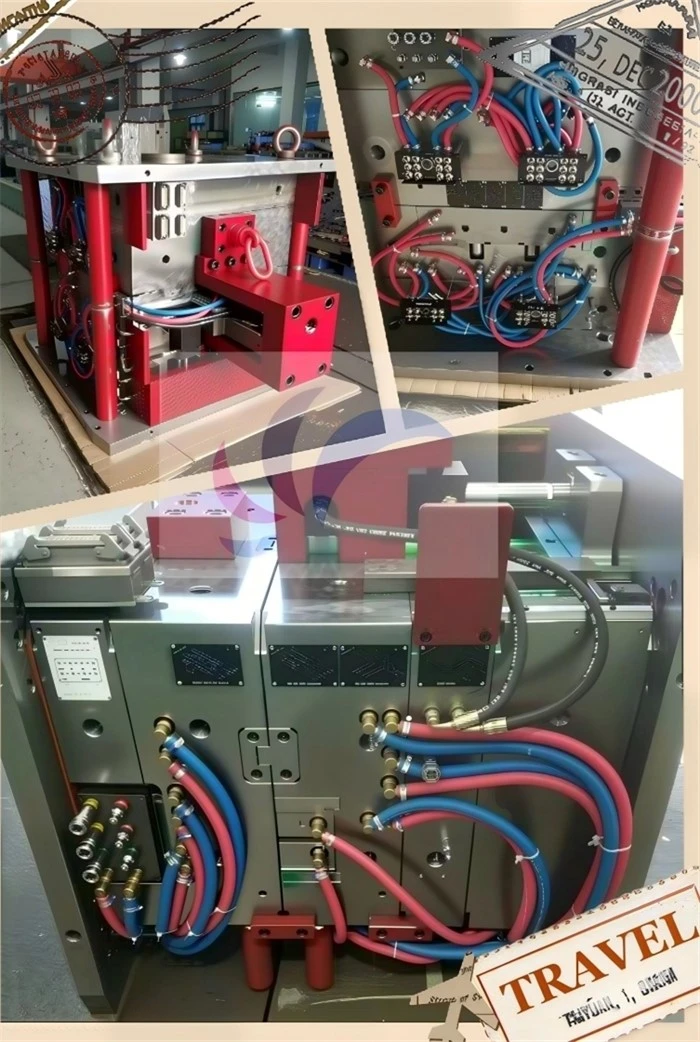
Machining Processes for Different Mold Components
Mold components often have different shapes, surface requirements, and machining conditions. For example, a cavity may require a smooth formed surface, while a slider needs accurate contact and movement surfaces. One machining method cannot cover every feature efficiently.
Deep Mould uses several machining processes to handle these requirements.
• CNC Machining
CNC machining is used for mold cores, cavities, inserts, and structural components. Based on CAD data, it can produce complex profiles and surfaces according to the specified dimensions.
• EDM Machining
Some mold features are difficult to reach with conventional cutting tools. EDM is suitable for deep cavities, narrow grooves, and detailed areas where tool access is limited.
• Wire Cutting
Wire cutting is commonly used for slots, profiles, and components that require accurate contours. It also supports the machining of certain slider and mold insert structures.
• Grinding and Polishing
After the main machining work, grinding and polishing help refine dimensions and surface conditions. The required finish depends on the molded product. For example, transparent parts, visible exterior housings, and functional internal components may have different surface requirements.
By combining these processes, our precision mould making company can manufacture complete tooling as well as individual components for mold modification or replacement.
Mold Structure and Details That Affect Production
A well-designed mold needs to form the required part geometry while allowing the machine to operate smoothly. Therefore, mold design should consider more than the shape of the cavity.
Several details deserve attention during the engineering stage:
• Parting line: Its position affects the appearance of the molded part, mold construction, and potential flash areas.
• Draft angles: Suitable draft helps the part separate from the core and cavity during ejection.
• Sliders and lifters: These mechanisms form side openings, undercuts, and locking features that cannot release through a standard straight-pull mold.
• Cooling channels: Their layout influences temperature distribution and the time required for the part to cool.
• Ejection system: Ejector positions should match the part structure to reduce deformation and unwanted marks.
In addition, a DFM review helps identify possible design and tooling concerns before manufacturing. For more complex parts, Moldflow analysis can provide information about filling behavior and help compare different gate or runner arrangements.
These checks are particularly useful for housings with large flat surfaces, side openings, or multiple mounting features. Small changes in mold structure can affect both part dimensions and the ease of production. Therefore, the engineering team should review these details together with the customer's functional requirements.
Manufacturing Support from Prototypes to Production
Product development does not always begin with a requirement for large production quantities. Some customers need prototypes to check dimensions and assembly, while others want a small batch before confirming their market demand.
Deep Mould supports different project stages through a range of manufacturing processes. These include 3D printing, vacuum casting, CNC machining, injection mold manufacturing, and plastic injection molding.
For metal parts, our available processes also include laser cutting, metal stamping, bending, welding, EDM, wire cutting, grinding, polishing, and precision assembly.
This manufacturing scope allows us to work on plastic and metal components for automotive, household appliances, medical, consumer goods, electronics, and automation applications.
For example, a customer developing a new plastic housing may first need a prototype for fit checks. After confirming the design, the project can move to mold manufacturing and injection molding. By considering these stages together, customers can make decisions based on the product's development schedule and expected production volume.
About Deep Mould
Deep Mould was established in Dongguan, China, in 2016. In 2020, the company moved to its current manufacturing facility in Humen, Dongguan. The facility covers more than 6,000 square meters and has a team of over 80 employees.
With experience across more than 1,000 projects, we provide services covering product development, mold design, tooling manufacturing, machining, and plastic injection molding.
Our team works with customers from different industries and markets. We understand that each project has its own requirements for product structure, material, appearance, dimensional control, and delivery schedule. Therefore, we discuss these details with customers before confirming the manufacturing approach.
For overseas buyers looking for a China mould making company, clear technical communication is also important. Drawings, material specifications, mold requirements, and production expectations should be understood before the project moves forward.


